Moving to another country is about so much more than visiting new places, taking pictures, and trying the local food. It’s about learning how to navigate a completely different environment, adjusting to unfamiliar routines, and discovering that some of the things you considered completely normal back home might not be so normal somewhere else.
As an American from Indiana who has spent the past few months living in Valencia, Spain, I’ve experienced plenty of surprises along the way. Before arriving, I had certain expectations about what living in Spain would look like. Some things were easier than I expected, others took a little getting used to, and a few have made me question why we don’t do things the same way back home.
From learning to navigate public transportation to adjusting to later meal times, trying unfamiliar foods, and constantly wondering whether we’re being the loud Americans in the room, I’ve learned that living abroad comes with plenty of little lessons.
If you’re thinking about studying abroad, moving to Spain, or simply curious about what everyday life here is really like, here are some of the things I’ve learned along the way.

How Do I Get Around Valencia?
One of my biggest adjustments when moving to Spain was public transportation. Where I’m from in Indiana, public transportation is nearly nonexistent. Driving is simply part of everyday life. You get in your car, drive wherever you need to go, and repeat the process the next day. So going from relying on a car to using buses and the metro every day was a pretty big change.
But honestly? I love it.
You mean I can just swipe a card, get on a bus or metro, let someone else do the driving, and get almost anywhere in the city? And it costs me less to recharge my metro card for a month than I would spend on gas in that same amount of time? Amazing!
I found navigating Valencia’s transportation system relatively easy. As long as I used common sense and had Google Maps, I could usually figure out where I needed to go. One thing I did have to learn was that getting on a bus isn’t always as simple as standing at the stop. You actually have to stick your hand out to signal the driver that you want to get on. Otherwise, they might just keep driving!
For anyone coming from somewhere without much public transportation, don’t let the idea of figuring out a new system intimidate you. It might take a little practice, but having the ability to get around the city without needing a car is incredibly convenient.
Another thing I quickly came to appreciate was how walkable Valencia is. It feels like you can walk almost anywhere, as long as your legs have the energy for it. Coming from somewhere where driving is the norm, being able to walk to restaurants, stores, and other parts of the city has been such a nice change.
Of course, walking here comes with its own set of rules. Pay attention to traffic, use crosswalks, and don’t assume a driver will stop just because you’re approaching a crossing. I’ve learned to be particularly mindful of cars when crossing the street. Drivers can be pretty impatient here at times!
And while public transportation makes getting around incredibly convenient, cars are still everywhere. Ubers are generally easy to find, whether you’re heading to the airport at 5:30 in the morning, coming home after a night out, or simply need a ride when the buses aren’t running.
I don’t think I fully appreciated how convenient public transportation could be until I actually started using it every day. It’s definitely something I’ll miss when I return to Indiana.

What Cultural Differences Should Americans Expect in Valencia?
Some of the biggest differences I’ve noticed aren’t necessarily major cultural traditions. They’re the little things that happen every single day, things you probably wouldn’t think twice about until you experience them somewhere else.
One of the first things that caught my attention was how much people stare. This was something that surprised me quite a bit. Many of my friends found it uncomfortable how much people seem to stare here. In the United States, it’s more common for someone to quickly look away if you catch them looking at you. Here, it almost becomes a contest. Someone looks at you, you look back, and neither person seems particularly interested in looking away first.
Eventually, I decided that I wasn’t going to complain about people staring, I would turn around and do the exact same thing.
Another adjustment was getting used to the Spanish schedule, especially when it comes to eating. Before coming here, I had heard plenty about how late people eat in Spain, but experiencing it firsthand was a different story.
Lunch at 2 p.m.? At first, I wasn’t so sure about that. I’m used to eating lunch much earlier in the United States, so waiting until the afternoon took some getting used to. My stomach would start grumbling at work around 12:30, and I would be counting down the minutes until lunch.
Eventually, though, it became my new normal. Now I’m honestly a little scared to return to the United States and have to eat lunch at 11:30 again!
And what about siesta? Before coming to Spain, I had this idea that siesta meant the entire city practically shut down between 3 and 6 p.m. While some businesses do close during parts of the afternoon, it’s not exactly the ghost town I imagined. Plenty of businesses continue operating, and the city doesn’t simply stop for a few hours every day.
It’s a good reminder that some of the things we think we know about another country’s culture are based on stereotypes or generalizations rather than what everyday life actually looks like.
Are Americans Really That Loud?
If there’s one thing I think about more than I probably should, it’s whether I’m being the loud American.
This isn’t necessarily something you should spend your entire time abroad worrying about, but it can be pretty noticeable when you’re out with a group of American friends.
There have been plenty of times when four or so of us girls get on a bus, start talking in English, and suddenly realize we’re the loudest people there. The same thing happens in restaurants, on the street, and pretty much anywhere we end up together.
It’s not necessarily a bad thing, and there’s no reason to be embarrassed about where you’re from. But it does make you more aware of how you come across in a different culture.
Living abroad has made me pay more attention to little things I probably never thought twice about at home. Sometimes it’s simply recognizing that the way you’re used to doing something isn’t necessarily how everyone else does it.
I also think there’s a balance between being respectful of another culture and feeling like you have to change your entire personality to fit in. You don’t need to stop being yourself just because you’re somewhere new. Being aware of your surroundings, respecting the people around you, and being open to different social norms goes a long way.
What Food Did I Eat While In Valencia?
One thing I have absolutely loved about living in Spain is getting to try so many different foods.
Coming from Indiana, seafood isn’t something I had a ton of access to growing up, at least not the kind of fresh seafood I’ve been able to try here. Since arriving, I’ve tried octopus, calamari, oysters, shrimp, and even snails!
Octopus was surprisingly one of my favorites. Calamari, on the other hand, wasn’t really for me. You win some, you lose some!
And then there’s paella. (Pictured below)
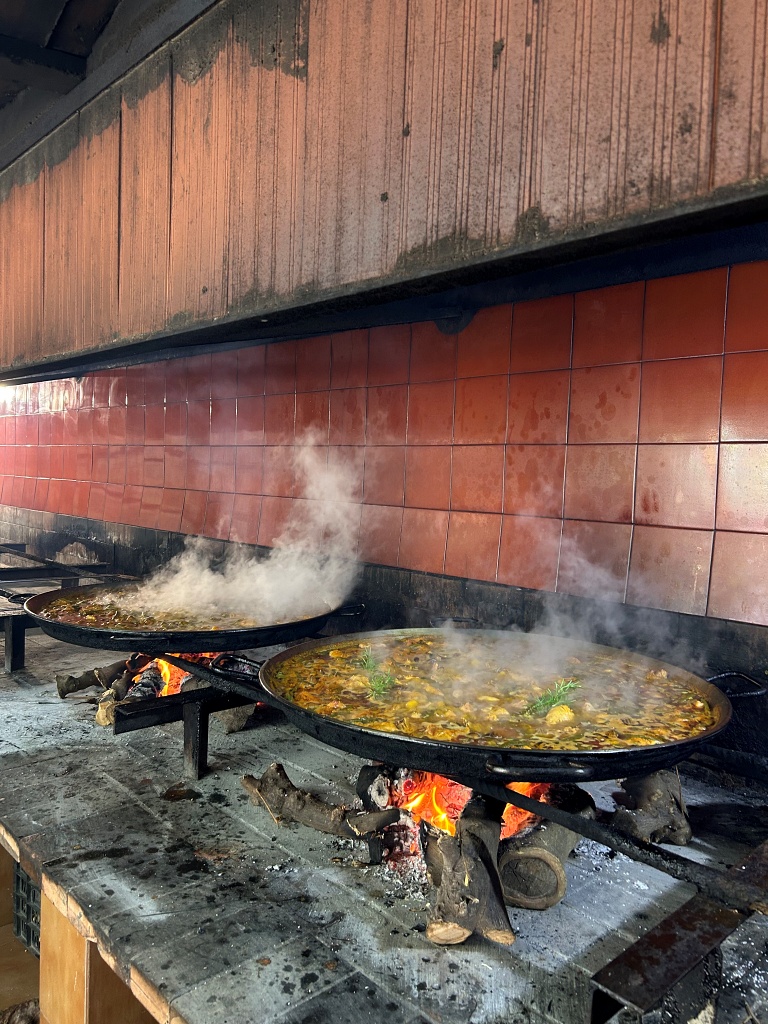
If you’re coming to Valencia, trying paella should absolutely be on your list. Valencia is known for its paella, and getting to try it here is a must. Traditional Valencian paella can include rice, chicken, rabbit, green beans, and snails. Yes, snails! I know that might sound intimidating, but I promise they’re worth trying.
Another fun fact: paella gets its name from the pan it’s cooked in.
If you’re someone who doesn’t eat much meat, don’t let that stop you from trying it. Find a friend who does, share the dish, and enjoy the rice! I also had friends who were vegan and vegetarian and they were always able to find options to cater to their needs. You can also check out our guide to Being Vegan or Vegetarian in Spain for more ideas.
And don’t forget tapas. One of my favorite parts about ordering tapas is getting to try a little bit of everything. You can order seafood, potatoes, Spanish ham (jamón), cheese, croquettes, and so much more. Instead of committing to one meal, you can share several smaller dishes and experience a little more of what Spanish cuisine has to offer.
My personal favorite? Patatas bravas!
They’re fried potatoes served with aioli and bravas sauce. The bravas sauce has a little kick, but mixed with the aioli, it’s not too spicy. As someone who isn’t a fan of spicy food, these are absolutely perfect. And honestly, I love a good fried potato.
Speaking of spice, if you’re someone who loves hot sauce, you might want to buy some and put it in your purse! Spanish food has plenty of flavor, but it hasn’t been particularly spicy in my experience. Thankfully, that’s perfect for someone like me.
My biggest food recommendation is to be adventurous. Try something you wouldn’t normally order at home. You might surprise yourself!
Do You Need to Know Spanish to Live in Spain?
One thing I worried about before arriving was not knowing enough Spanish.
I still believe it’s important to practice the language as much as possible. Even learning simple greetings and making an effort to communicate in Spanish can go a long way. You don’t need to be fluent, and you certainly don’t need perfect grammar to show respect for the language and culture.
That said, I found it easier to navigate everyday situations than I originally expected. At many stores, restaurants, airports, and train stations, I’ve been able to find someone who speaks English. If the first person I speak with isn’t comfortable speaking English, they’ll often find another employee who can help.
This doesn’t mean you should rely on everyone speaking English. Learning Spanish is part of experiencing the country, and making an effort is important. But if you’re worried that not being fluent will prevent you from doing everyday things, don’t let that stop you from going.
I’d recommend learning a few useful phrases before you arrive. You’ll probably use them more often than you think! Here are a few simple ones to get you started:
- Hola – Hello
- Buenos días – Good morning
- Por favor – Please
- Gracias – Thank you
- De nada – You’re welcome
- ¿Cuánto cuesta? – How much does it cost?
- ¿Dónde está…? – Where is…?
- No hablo mucho español – I don’t speak much Spanish
- ¿Hablas inglés? – Do you speak English?
- La cuenta, por favor – The bill, please
- Necesito ayuda – I need help
A little Spanish can also make everyday interactions feel less intimidating. Whether you’re ordering food, asking for directions, shopping, or introducing yourself to someone, every interaction is an opportunity to practice.
You’ll learn as you go, and a little effort makes a difference.
What Did I Explore While Living in Valencia?
[IMAGE 06-valencia-cf-match.jpg, aligned right]
One thing I would encourage anyone living in or visiting Valencia to do is get out and explore as much as you can. Say yes to adventures, take the long way home, and don’t be afraid to wander around without a specific destination in mind. You can visit the city center, see the major tourist attractions like the cathedral, City of Arts and Sciences, and Central Market, and feel like you’ve checked everything off your list. But don’t stop there! Keep walking, take a few turns down streets you haven’t been on, and see where you end up.
Some of my favorite discoveries came from simply wandering around. You’ll find little restaurants, ice cream shops (my personal favorite), beautiful architecture, charming homes, street art, and so many things you probably wouldn’t have noticed if you stuck to the main streets. Not every great experience has to be planned, and sometimes the best parts of a city are the places you stumble upon by accident. And if you’re worried about getting lost, Google Maps is always there to help you find your way home. So explore, take the extra turn, and let yourself get a little lost. You never know what you’ll find!

What Have I Learned From Living Somewhere New?
Living in Spain has taught me that experiencing another country is about so much more than visiting its famous landmarks or trying its most popular restaurants. It’s about the everyday routines that slowly become your own.
It’s learning how to navigate a transportation system you never had back home, getting used to eating lunch hours later than you’re accustomed to, trying foods you never imagined ordering, and becoming more aware of the way you interact with the world around you.
Some things have been easier than expected, and others have taken time. But that’s what makes living abroad such a valuable experience. You start to appreciate things you might have overlooked before, question routines you’ve always considered normal, and become more comfortable with the unfamiliar.
You don’t have to know everything before you arrive. You just have to be willing to learn, try new things, and embrace the occasional uncomfortable or unexpected moment.
And before you know it, the things that once felt so foreign start to feel like everyday life, and having to say goodbye becomes the hard part.


Leave a Reply